
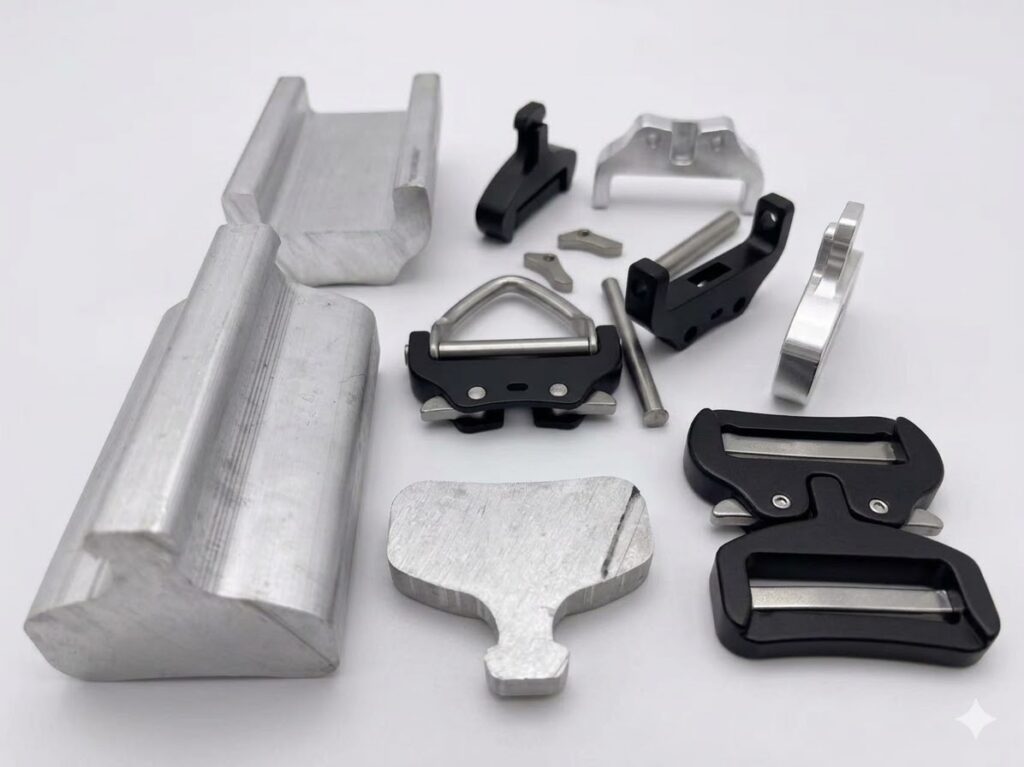
Customizing or wholesaling aluminum quick-release buckles from China involves a structured process that covers supplier selection, product customization, sample confirmation, order placement, and logistics. Below is a detailed, actionable guide tailored to international buyers:
1. Identify Reliable Chinese Suppliers
Focus on suppliers with experience in metal hardware and export capabilities, especially those familiar with outdoor/industrial standards (critical for your anti-fall/climbing gear business).
- Key Platforms:
- Alibaba/Alibaba International: The largest B2B platform; filter suppliers by “Gold Supplier”, “Onsite Checked”, and export experience to regions like Europe, North America, or Japan. Use keywords: aluminum quick-release buckle wholesale, custom metal buckle manufacturer.
- Made-in-China: Specializes in industrial suppliers; check factory certifications (ISO 9001, SGS, etc.).
- Industry Trade Shows: Attend the Canton Fair (Phase 1: hardware & tools), China Outdoor Products Exhibition, or Shanghai Hardware Show to meet factories face-to-face and inspect product samples.
- Target Regions:
- Zhejiang (Yiwu, Wenzhou): A hub for small hardware; many factories specialize in precision metal buckles.
- Guangdong (Dongguan, Shenzhen): Strong in customized metal processing and export-oriented manufacturing, ideal for high-precision aluminum buckles.
2. Clarify Customization Requirements
Provide detailed specifications to suppliers to avoid miscommunication. Key parameters include:
- Material & Grade: Specify 6061/6063 aluminum alloy (lightweight, corrosion-resistant, suitable for outdoor/anti-fall use) or 7075 aluminum (higher strength for heavy-duty scenarios).
- Size & Shape: Offer CAD drawings, 3D models, or physical samples; confirm inner width, thickness, and overall dimensions (e.g., 25mm, 38mm width for webbing compatibility).
- Surface Treatment:
- Anodizing (black, silver, red, or custom colors—wear-resistant and meets environmental standards like REACH).
- Powder coating (for thicker protection, suitable for industrial applications).
- Polishing (for a smooth, decorative finish).
- Functional Design:
- Quick-release mechanism type (side-press, push-button, auto-lock—critical for anti-fall gear safety).
- Load capacity requirements (e.g., 900kg, 1500kg, 2200kg; need to match anti-fall product standards).
- Logo customization: Laser engraving, embossing, or printing of your brand logo (provide vector files for clarity).
- Quality Standards: Require compliance with international norms such as EN 362 (for personal protective equipment buckles), ANSI Z359 (US standard), or Japanese JIS standards if targeting the Japanese market.
3. Sample Confirmation Process
- Request Free/Paid Samples: Most factories charge a sample fee (ranging from $20 to $100, depending on the level of customization), which is often refundable upon placing a bulk order.
- Sample Inspection:
- Check physical dimensions against your drawings (use calipers or gauges).
- Test functionality: Verify the quick-release mechanism’s smoothness, locking stability, and load-bearing capacity (send samples to a third-party lab like SGS or Intertek for certification if needed).
- Confirm surface treatment quality: Check for color uniformity, scratch resistance, and no burrs.
- Revise Samples: If adjustments are needed, provide detailed feedback to the factory and repeat the sampling process until fully satisfied.
4. Bulk Order Negotiation & Contract Signing
- MOQ & Pricing: Aluminum buckle factories typically have an MOQ of 500–1000 pieces; unit prices decrease significantly with larger orders (e.g., $0.5–$3 per piece, depending on size, material, and customization). Negotiate tiered pricing for future reorders.
- Payment Terms:
- Common terms for international buyers: 30% deposit (T/T) + 70% balance before shipment (most secure).
- For long-term cooperation: Consider L/C (Letter of Credit) to reduce risk, or Alibaba Trade Assurance (escrow service to protect payment).
- Lead Time: Custom orders usually take 20–45 days (including mold making, production, and quality inspection); bulk orders without customization take 10–20 days. Clarify delivery time in the contract.
- Contract Clauses: Clearly specify product specifications, quality standards, delivery date, payment terms, penalty for delayed delivery, and after-sales service (e.g., replacement for defective products).
5. Production Follow-Up & Quality Control
- Factory Inspection: Arrange a third-party inspection (e.g., SGS, BV) before shipment, or send your own QC team to check:
- Material consistency (verify aluminum alloy grade via testing).
- Production process compliance (e.g., anodizing thickness, welding quality if applicable).
- Random sampling test (load-bearing, durability, and functional performance).
- Packaging Requirements: Request export-standard packaging (e.g., inner poly bags + outer cartons, with anti-collision foam for fragile products) to avoid damage during transit. Mark cartons with product specifications, batch numbers, and shipping marks (per your logistics requirements).
6. Logistics & Customs Clearance
- Shipping Method:
- Sea Freight: Cost-effective for bulk orders (MOQ ≥ 1000 pieces); takes 20–40 days to major ports (e.g., LA, Hamburg, Tokyo).
- Air Freight: Faster (3–7 days) but more expensive, suitable for small-batch urgent orders.
- Couriers (DHL/UPS/FedEx): For sample delivery or small orders; door-to-door service with simplified customs clearance.
- Customs Documents: The factory should provide a complete set of documents:
- Commercial Invoice, Packing List, Bill of Lading/Air Waybill.
- Certificate of Origin (CO), CE/EN 362 certification (if applicable).
- Material Safety Data Sheet (MSDS) for aluminum and surface treatment chemicals.
- Tariff & Duties: Check the tariff code for aluminum buckles (e.g., 83081000 for metal buckles) in your target country, and calculate import duties in advance. Some free trade agreements (e.g., China-ASEAN, China-Chile) may reduce tariffs—ask the factory to provide a preferential CO.
7. After-Sales Service & Long-Term Cooperation
- Defective Product Handling: Agree on a replacement or refund policy for defective products (e.g., replace 1:1 for non-human damage within 3 months).
- Reorder Process: Establish a stable supply chain with reliable factories; negotiate priority production for repeat orders and bulk purchase discounts.
Key Tips for Your Anti-Fall Gear Business
- Prioritize Safety Certifications: Since the buckles are used in anti-fall equipment, ensure compliance with EN 362 (EU) and ANSI Z359 (US) to meet market access requirements.
- Avoid Low-Cost Non-Standard Factories: Inferior aluminum alloys or poor welding may lead to buckle failure—choose factories with PPE hardware production experience.