
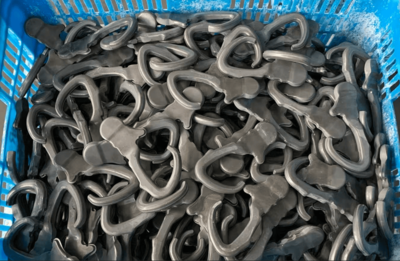
Customizing climbing carabiners (including standard D-rings, quick-release carabiners, pear-shaped carabiners, etc.) from Chinese manufacturers (mostly concentrated in Shenzhen, Zhejiang, Jiangsu, and Guangdong) is a streamlined process, but it requires strict attention to product safety standards (ANSI Z359, EN 362, GB 24542, CSA Z259.12, etc.) and customization details (material, design, testing) since climbing carabiners are professional fall protection/sport gear with non-negotiable quality requirements.
Below is a step-by-step guide for customizing, including key requirements, manufacturer selection, customization process, quality control, and shipping—tailored for importers, wholesalers, and brand owners.
1. Clarify Core Customization Requirements (First & Most Critical Step)
(1) Product Type & Core Use Case
- Climbing/Outdoor sports: Lightweight, ergonomic, load capacity ≥22kN (standard for climbing carabiners per EN 362/ANSI Z359).
- Fall protection/industrial use: Heavy-duty, corrosion-resistant, load capacity ≥25kN (for construction, aerial work; comply with GB 24542/CSA Z259.12).
- Leisure/accessory: Light load (≤10kN), cost-effective (for bags, pet gear—note: clearly mark “not for climbing/fall protection”).
Common types: D-ring, offset D-ring, quick-release (auto-lock/ twist-lock/ screw-gate) carabiner, pear-shaped, mini carabiner.
(2) Material & Grade
- 6061-T6 Aluminum Alloy: Cost-effective, medium strength (for leisure/entry-level climbing).
- 7075-T6 Aluminum Alloy: High-strength (industry standard for professional climbing/fall protection), corrosion-resistant, the most commonly customized grade.
- Stainless Steel (304/316): For marine/industrial high-corrosion environments (heavier, higher cost).
- Avoid low-grade aluminum: It fails load testing and risks safety accidents.
(3) Safety Standards & Certification
- North America: ANSI Z359.12 (US) + CSA Z259.12 (Canada)
- Europe: EN 362 (personal fall protection) + CE marking
- China: GB 24542-2020 (fall protection equipment)
- Australia: AS/NZS 1891
- Russia/CIS: EAC certification
Critical note: Customized carabiners must pass load testing, fatigue testing, and corrosion testing—ask manufacturers to provide test reports (factory or third-party).
(4) Design & Dimension Customization
- Basic specs: Length, width, gate opening size, weight (provide CAD/2D drawings if available; manufacturers can design for free if you have a sketch).
- Branding: Laser engraving (most common, durable) / silk screen printing / embossing of logo, brand name, load capacity (e.g., 25kN), certification marks (CE/ANSI), and batch number (for traceability).
- Color & Finish: Anodized finish (matte black, silver, red, blue, custom Pantone color)—7075 aluminum anodizing is more durable; powder coating (for steel carabiners).
- Gate type: Screw-gate (anti-accidental opening), auto-lock (one-hand operation for industrial use), twist-lock (climbing), straight gate.
(5) MOQ (Minimum Order Quantity)
- Standard customization (logo engraving/color change): MOQ 500–1000 pcs (for 7075 aluminum).
- Full custom (new mold/unique shape): MOQ 2000–5000 pcs (mold cost is one-time, ~$300–$1500 depending on complexity; mold can be retained for future orders).
- Small MOQ (≤500): Possible for some manufacturers but with higher unit prices and longer lead times.
(6) Packaging Requirements
(7) Lead Time
- Sample: 3–7 days (for standard custom); 7–15 days (for full custom with mold making).
- Mass production: 15–30 days after sample approval (longer for large orders >10,000 pcs or peak seasons).
(8) Testing Requirements
- Static load test (22kN/25kN for 3 minutes without deformation/fracture)
- Dynamic load test
- Gate strength test
- Corrosion resistance test (salt spray test for coastal markets)
- Fatigue test (10,000+ load cycles)
2. Select Reliable Chinese Climbing Carabiner Manufacturers
(1) Top Sourcing Channels
- Alibaba.com/Alibaba International: The most common platform—filter by “Gold Supplier” “Assessed Supplier” “ISO 9001 certified”, and check product certifications (CE/ANSI/GB) and factory audit reports.
- Made-in-China.com: Specialized in industrial products; good for finding heavy-duty fall protection carabiner manufacturers.
- Local trade shows: Canton Fair (Guangzhou), China International Sporting Goods Show (Shanghai)—meet manufacturers in person, check samples, and audit factories.
- Industry referrals: Ask other importers/wholesalers in the fall protection/ climbing gear industry (Shenzhen is a hub for fall protection hardware—many manufacturers here specialize in carabiners/D-rings/quick-release buckles).
(2) Key Selection Criteria (Must Verify)
- Certifications & Factory Qualifications: ISO 9001 (quality management), ISO 14001 (environmental), and in-house testing lab (critical for safety gear).
- Product Certifications: Check existing CE/ANSI/GB test reports (avoid manufacturers who “promise certification but cannot provide test data”).
- Production Capacity: Ask about monthly output, production lines (CNC machining, anodizing, laser engraving)—ensure they can meet your order volume.
- Customization Experience: Ask for past custom carabiner samples/ cases (e.g., for European/US brands)—verify their understanding of global standards.
- Factory Audit: For large orders, arrange a third-party audit (SGS/BV) or video audit to check production processes, quality control, and traceability.
(3) Red Flags to Avoid
- Manufacturers who quote extremely low prices (likely use low-grade aluminum, skip testing, or cut corners on anodizing).
- No in-house testing lab and cannot arrange third-party certification.
- Vague answers about safety standards (e.g., “our carabiners are ‘strong enough’ without specifying kN or test reports”).
- Refuse to provide pre-production samples for testing.
3. The Full Customization Process (Step-by-Step)
Step 1: Send a Detailed RFQ (Request for Quotation)
Step 2: Quotation & Negotiation
- Unit price (FOB/CIF/EXW—FOB Shenzhen/Shanghai is the most common for international shipping).
- Mold cost (if full custom).
- MOQ, lead time, payment terms.
- Testing cost (factory/third-party).
- Shipping cost (rough estimate).
- Payment terms: Chinese manufacturers typically require 30% deposit (T/T) before production, 70% balance before shipment (L/C is acceptable for large orders >$10,000; PayPal/Alipay for small sample orders).
- Mold cost: Negotiate to waive the mold cost for large repeat orders.
- Pricing: Bulk pricing for large orders (e.g., 10,000+ pcs) can save 10–30%.
Step 3: Pre-Production Sample Confirmation
- Manufacturers will produce 1–3 pre-production samples per your requirements (sample cost: $10–$50 per pc, usually refundable after mass production).
- Critical: Test the samples rigorously (or send to a third-party lab) for load capacity, gate function, finish quality, and logo accuracy. Confirm compliance with your target market’s safety standards.
- Sign a sample approval form (with photos/specs) to avoid disputes in mass production.
Step 4: Mass Production & Quality Control (QC)
- After sample approval and deposit payment, manufacturers start mass production.
- QC during production: For large orders, arrange in-line inspection (check 10–20% of products for dimension, finish, logo) or hire a third-party QC company (SGS/BV) to conduct a pre-shipment inspection (PSI)—check 2–5% of the order against the approved sample and specs.
- Manufacturers provide a production report and test reports (factory/third-party) before shipment.
Step 5: Payment & Shipment
- Pay the 70% balance (per negotiated terms) after QC approval.
- Choose shipping method:
- Sea freight: For large orders (≥1 carton), low cost, 20–45 days (to US/Europe/Australia).
- Air freight: For small/urgent orders, fast (3–7 days), higher cost.
- Express (DHL/FedEx/UPS): For samples/small MOQ, door-to-door, 3–5 days, most expensive.
- Manufacturers will provide shipping documents: Commercial invoice, packing list, bill of lading (B/L), test reports, certification documents (CE/ANSI), and CO (Certificate of Origin—for customs clearance).
Step 6: Customs Clearance & After-Sales
- Provide the shipping documents to your local customs broker—ensure all certification marks (CE/ANSI) and product labeling are compliant with local regulations (e.g., US CPSC, EU REACH).
- After-sales: Reputable manufacturers offer a warranty (usually 1–2 years) for manufacturing defects—negotiate a replacement/refund policy for defective products (rare if QC is strict).
4. Key Cost Factors for Custom Climbing Carabiners
- Material grade (7075-T6 > 6061-T6 > stainless steel).
- Customization complexity (mold cost > laser engraving > color change).
- MOQ (lower MOQ = higher unit price).
- Testing/certification (third-party testing: $200–$1000 per standard).
- Finish/color (custom Pantone anodizing > standard colors).
- Order volume (bulk orders >10,000 pcs get the best pricing).
5. Critical Tips to Avoid Risks
(1) Never Compromise on Safety
- Climbing/fall protection carabiners are PPE (Personal Protective Equipment) in most countries—non-compliant products can lead to customs seizure, product recalls, or legal liability for accidents.
- Always ask for test reports and certification documents (not just “certification marks on the product”).
(2) Use a Written Contract
- All product specs (material, load capacity, certification).
- Sample approval terms, production lead time.
- QC standards and inspection process.
- Payment terms, shipping terms, and penalty clauses for delays/defects.
- Intellectual property (IP) agreement (if you have custom designs—prevent manufacturers from selling your design to other buyers).
(3) Verify Labeling & Marking
- Load capacity (kN)
- Certification marks (CE/ANSI/CSA)
- Manufacturer’s name/batch number
- Warning labels (if applicable)
- For leisure carabiners: Clearly mark “Not for climbing/fall protection/overhead use” to avoid liability.
(4) Choose FOB Shipping Term
(5) Build a Long-Term Partnership
6. Top Chinese Manufacturing Hubs for Climbing Carabiners
- Shenzhen, Guangdong: Hub for fall protection hardware (carabiners, D-rings, quick-release buckles)—many manufacturers specialize in high-precision, certified carabiners for international markets.
- Yiwu, Zhejiang: Cost-effective leisure/accessory carabiners (low MOQ).
- Kunshan, Jiangsu: Industrial-grade steel carabiners for fall protection/construction.
- Dongguan, Guangdong: High-strength aluminum alloy carabiners with custom anodizing/engraving.